
What Is Digital Risk Protection?
What is digital risk protection? It’s a question more and more organizations are asking as cyber threats grow in complexity and frequency. Digital Risk Protection (DRP) is the proactive process of monitoring, identifying, and responding to online threats that exist outside your internal network. These threats can come from social Media, dark web forums, leaked credentials, brand impersonation, and more.
In an era where your digital footprint is often more exposed than your physical one, digital risk protection provides organizations with visibility into threats that traditional security tools cannot reach. From brand abuse to executive impersonation, DRP ensures you can detect and mitigate risks before they turn into full-blown breaches.

Why Is Digital Risk Protection Important?
Many people still ask, “What is digital risk protection and why do I need it if I already have firewalls and endpoint protection?” The answer lies in the nature of today’s threat landscape. Conventional security focuses on defending what’s inside your network. But what about threats outside?
Here’s why DRP matters:
- Brand misuse: Attackers frequently create fake domains, apps, or social Media accounts using your brand name to trick customers.
- Data leaks: Sensitive information may be exposed via employee credential breaches, third-party vulnerabilities, or even accidental oversharing.
- Reputation management: One phishing attack using your name can damage years of trust.
- Regulatory compliance: Data exposure and misuse can lead to fines under GDPR, CCPA, and other regulations.
Digital risk protection extends your security posture beyond the perimeter—across the web, deep web, and dark web.
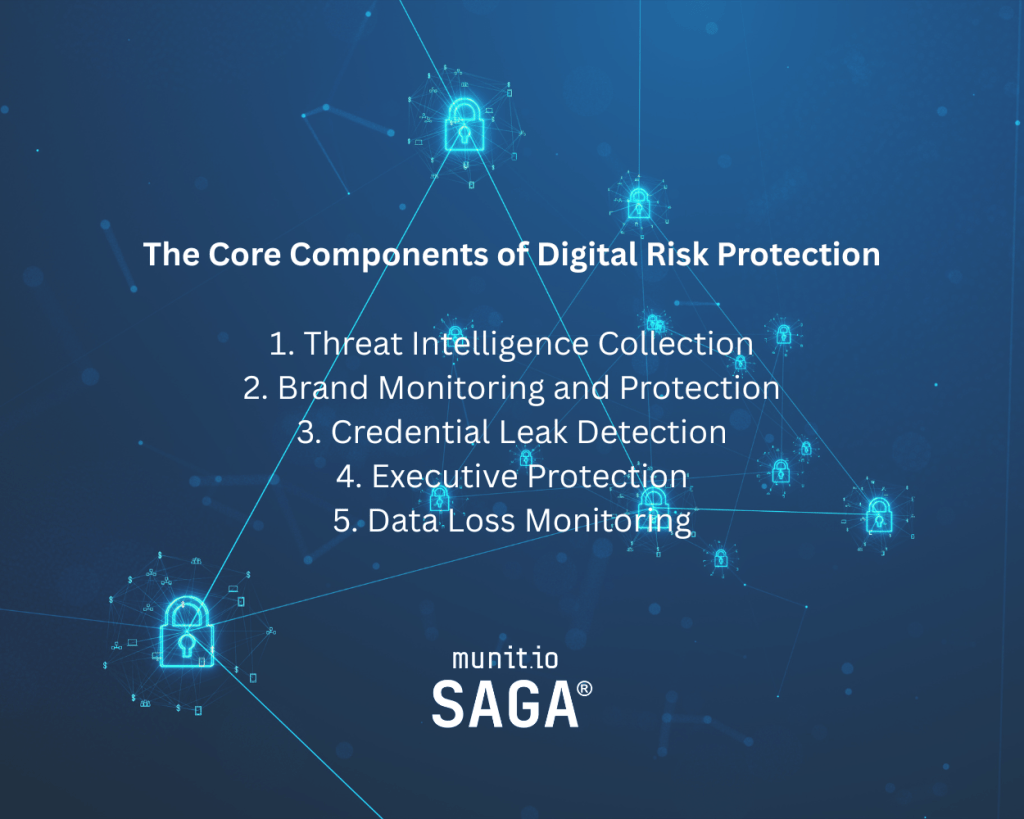
The Core Components of Digital Risk Protection
Understanding what digital risk protection is requires diving into the key functions it provides. A well-implemented DRP strategy should include:
1. Threat Intelligence Collection
This is the foundation. DRP systems scan open sources, social platforms, marketplaces, paste sites, and dark web forums to find relevant threats to your organization. These tools look for mentions of your brand, executives, product names, and more.
2. Brand Monitoring and Protection
Your brand is a high-value asset. DRP tools help detect fake websites, impersonation profiles, and fraudulent mobile apps pretending to be your business. Stopping these early prevents phishing and fraud campaigns.
3. Credential Leak Detection
Attackers often use leaked usernames and passwords to gain access to internal systems. DRP tools scan known breach repositories and hacker forums to spot these leaks and notify you before damage is done.
4. Executive Protection
High-profile individuals like CEOs and CISOs are prime targets. DRP monitors social Media and forums for impersonation, doxxing, and targeted threats.
5. Data Loss Monitoring
What happens when your company’s internal data—like source code or product blueprints—appears in places it shouldn’t? DRP can alert you to unauthorized data exposure on cloud storage, public GitHub repos, and file-sharing sites.

Who Needs Digital Risk Protection?
So, what is digital risk protection good for, and who needs it?
Any organization with a public presence is at risk. That includes:
- Financial institutions
- E-commerce platforms
- Healthcare providers
- SaaS companies
- Governments and public-sector entities
Whether you’re a startup or an enterprise, your digital footprint is wide. DRP helps ensure it stays secure.
How Digital Risk Protection Works in Practice
Let’s walk through a typical workflow using DRP:
- Asset Identification: You define what’s important—domains, social handles, executives, products.
- Continuous Monitoring: DRP engines scan digital channels 24/7.
- Alerting and Risk Scoring: Suspicious findings are triaged and scored by severity.
- Response: You receive actionable insights, takedown services, or automated threat mitigation tools.
- Reporting: Regular reports help you understand trends and adjust security posture.
A good DRP platform—like Munit.io’s own SAGA®—makes this process seamless, actionable, and fast.
Common Digital Threats DRP Helps You Address
Understanding what digital risk protection does means exploring the types of threats it covers:
- Fake websites mimicking your login pages
- Phishing emails spoofing your executives
- Credentials sold on dark web forums
- Leaked source code in public repositories
- False news or social Media attacks targeting your brand
- Impersonated job posts or mobile apps
- Discussions on underground marketplaces about your vulnerabilities
These are not theoretical risks—they happen daily to companies of all sizes.
Digital Risk Protection vs. Traditional Cybersecurity
You might be thinking, “I already have endpoint protection, SOC monitoring, and a firewall—why add DRP?”
Because digital risk protection covers external threats that traditional tools miss.
| Traditional Security | Digital Risk Protection |
|---|---|
| Focuses on internal networks | Focuses on external risks |
| Alerts after intrusion | Prevents before intrusion |
| Protects systems and users | Protects brand, executives, and data |
| Doesn’t monitor deep/dark web | Monitors all external channels |
In short, DRP isn’t a replacement—it’s a powerful extension.
Choosing a Digital Risk Protection Platform
Now that you understand what digital risk protection is, the next question is: how do you choose the right solution?
Here are key features to look for:
- Real-time monitoring of the web, dark web, and social platforms
- Automated alerting with risk scoring
- Takedown services for malicious content
- AI-powered threat detection
- Customizable dashboards and reports
- Integration with SIEM or SOAR tools
A platform like Munit.io’s SAGA® checks all these boxes—designed to protect digital assets before damage occurs.

Best Practices When Implementing DRP
- Involve key stakeholders: DRP impacts marketing, legal, compliance—not just IT.
- Start with your highest-value assets: Focus on brand terms, executive names, and customer data.
- Integrate DRP with incident response: Make sure you can act quickly on alerts.
- Educate internal teams: Make them aware of DRP alerts and how to respond.
- Review and refine regularly: DRP is not a one-time setup; it’s an evolving strategy.
What happens if you don’t have digital risk protection?
Failing to implement digital risk protection can leave your organization exposed to serious, and often preventable, consequences. Without the visibility and early warnings that DRP offers, threats can go undetected for weeks or even months—giving cybercriminals time to exploit your data, customers, and brand.
Here are just some of the risks companies face without digital risk protection in place:
- Brand abuse and phishing: Fake websites and spoofed email domains can trick your customers into handing over sensitive data, resulting in lost trust and legal exposure.
- Data leaks on the dark web: Without DRP, you may never know that employee credentials, internal documents, or customer data are being traded on underground forums.
- Delayed incident response: When threats are discovered too late, response times increase, and the impact of breaches grows exponentially.
- Financial losses: From regulatory fines to ransomware payments, the costs of unmanaged digital risk can be catastrophic.
- Reputational damage: Once public confidence is lost due to data mishandling or impersonation scams, it’s difficult—and expensive—to rebuild.
In short, the absence of digital risk protection creates blind spots. And in cybersecurity, blind spots are exactly where the most devastating attacks happen.
Final Thoughts: Why Digital Risk Protection Matters Now More Than Ever
To wrap up: what is digital risk protection in 2025?
It’s your first line of defense against an ever-expanding world of external threats. It’s how you protect your digital brand, your data, and your customers in an online environment where even a single exposed credential can lead to a catastrophic breach.
As attackers evolve, so must our defenses. Firewalls and antivirus aren’t enough anymore. DRP is what helps bridge the gap between internal security and external exposure.
Digital Risk Protection isn’t just a trend. It’s the future of proactive cybersecurity. And with the right tools, like Munit.io’s SAGA®, you can identify, manage, and eliminate threats before they ever reach your doorstep.